
The Secret Behind Kyocera's Long Lasting Components
Key Takeaways
Kyocera’s amorphous silicon drums are rated for up to 4.8 million A4 impressions under ideal conditions, dramatically outlasting typical organic photoconductor drums that require replacement at 100,000–200,000 pages.
The company’s fine ceramics heritage, dating back to 1959 in Kyoto, Japan, directly informs the durability of printer drums, fusers, and engine components used in today’s Kyocera printers.
Kyocera’s expertise in electronic components, such as capacitors and crystal devices, underpins their durable product offerings and supports their strong position in the market.
Kyocera offers a comprehensive range of devices tailored to meet the diverse needs of businesses.
The ECOSYS philosophy, launched in the early 1990s, separates long life components from toner consumables, cutting waste and lowering total cost of ownership across a device’s 5–7+ year lifespan.
Fewer moving parts, lower fusing temperatures, and recyclable toner packaging combine durability with reduced environmental impact.
Organizations using Kyocera devices experience fewer service calls, longer replacement cycles, and more predictable maintenance schedules compared with competing laser printers and inkjet systems.
From Fine Ceramics to Office Workhorses: How It All Started
Kyocera’s story begins in 1959 when the company was founded as Kyoto Ceramic Co., Ltd. in Japan. The original focus was industrial ceramics for electronics and cutting tools—materials engineered to withstand extreme conditions in semiconductor packages, automotive systems, and aerospace systems. In particular, Kyocera’s early production of electronic components, such as capacitors and crystal devices, laid the groundwork for its later expansion into high-margin engineered products and custom solutions. This expertise in fine ceramics created the foundation for what would eventually transform office equipment.
The properties that make fine ceramic components valuable in industrial tools translate directly to printer durability. Hardness, heat resistance, and chemical stability allow ceramic parts to resist the abrasion, thermal cycling, and contamination that wear down conventional materials. When Kyocera operates in the printer market, it brings decades of materials science knowledge to every component.
The timeline tells the story clearly. In the early 1990s, Kyocera introduced amorphous silicon drums to its printer line. The ECOSYS platform launched between 1992 and 1993, establishing the core philosophy that separates long-life drums from consumable toner. By the 2000s, the TASKalfa MFP series expanded this approach into high volume printing environments serving departments and production workflows. This progression wasn’t accidental—it was engineered from the ground up using advanced materials developed through industrial processing experience.
What Makes Kyocera Components Last So Long?
Kyocera rates key components for hundreds of thousands to millions of pages, far exceeding typical office duty cycles. While standard laser printers might specify drum replacement at 100,000–200,000 pages, Kyocera products routinely achieve 500,000 to 600,000+ pages on standard models.
The difference lies in amorphous silicon. This material’s hardness rivals that of industrial tools, resisting the constant abrasion from toner particles and paper dust that gradually degrades conventional imaging surfaces. The result is consistent toner transfer and stable print quality across years of use, not just months.
Beyond the drum, long-life fuser units, developer assemblies, and transfer units are engineered for sustained high volume printing. High-temperature bearings, heat-resistant coatings, and optimized lubricants help these components survive years of demanding use. Where competitor devices might need major service interventions annually, durable machines built on this platform can extend intervals significantly.
Inside the Drum: The Science of Kyocera’s Amorphous Silicon
The drum is the heart of any laser device, and it represents the primary differentiator in Kyocera’s engine design. Understanding what makes it special explains why kyocera’s commitment to durability delivers real-world results.
An amorphous silicon (a-Si) drum consists of a metal cylinder coated with multiple ultra-thin ceramic layers, including a photoconductive a-Si layer. Unlike organic photoconductor (OPC) drums found in most competitors, a-Si offers higher surface hardness, better heat tolerance, and greater resistance to UV and ozone exposure. One distributor described these drums as “second only to diamonds in hardness,” which translates to fewer scratches and more stable electrical charge characteristics over time.
The practical impact shows in product ratings. ECOSYS monochrome models and color TASKalfa MFPs use long-life drums rated well beyond common monthly volumes. Some devices achieve up to 4.8 million A4 impressions under ideal service conditions. This durability directly supports consistent text sharpness and halftone stability—the drum maintains its precision surface characteristics year after year, delivering consistent quality without the gradual degradation typical of lower-cost designs.
ECOSYS Philosophy: Separating Toner from the Engine
ECOSYS stands for ECOnomy, ECOlogy, and SYStem—a design philosophy introduced in the early 1990s to break the “throw-away cartridge” model that dominated the industry. The approach fundamentally changed how organizations consume printing resources.
Here’s how it works: the expensive drum and developer stay in the machine for years while users only replace a low-part-count toner cassette. These cassettes often contain just four main components rather than the 60+ parts found in traditional all-in-one cartridges. When needed, users also replace a compact waste toner container. The core engine remains untouched.
The practical impact is substantial. Consider a 5-year period at 10,000 pages per month—600,000 total pages. An ECOSYS device might keep the same drum unit throughout, while a typical laser would require multiple expensive drum or cartridge replacements. This translates to fewer replacements overall, reduced plastic and metal waste, a smaller logistics footprint, and simpler servicing since technicians deal with fewer complex assemblies.
The key ECOSYS benefits stack up: fewer parts to fail or replace, less material ending up in landfills, lower lifetime cost spread across years of operation, and more uptime since Kyocera’s print solutions consume fewer service resources. Additionally, Kyocera's print solutions consume less energy than others in the market and are built to last with long-life parts, resulting in a lower total cost for businesses.
Fewer Parts, Smarter Design: Why Simplicity Equals Longevity
Kyocera intentionally reduces part count in critical consumables and subsystems to eliminate failure points. This isn’t about cutting corners—it’s about removing complexity that creates problems.
The toner cassette illustrates this perfectly. While a typical competitor container might include approximately 60 separate parts, a Kyocera cassette uses around 4 main components according to the company’s technical data. Fewer parts means fewer opportunities for something to break, wear unevenly, or require replacement.
This simplicity extends throughout the machine. Streamlined paper paths reduce the risk of misfeeds and skew. Robust gear trains minimize vibration that can prematurely wear components. Rigid chassis frames maintain alignment across years of use, preventing the gradual degradation that leads to image defects and jams.
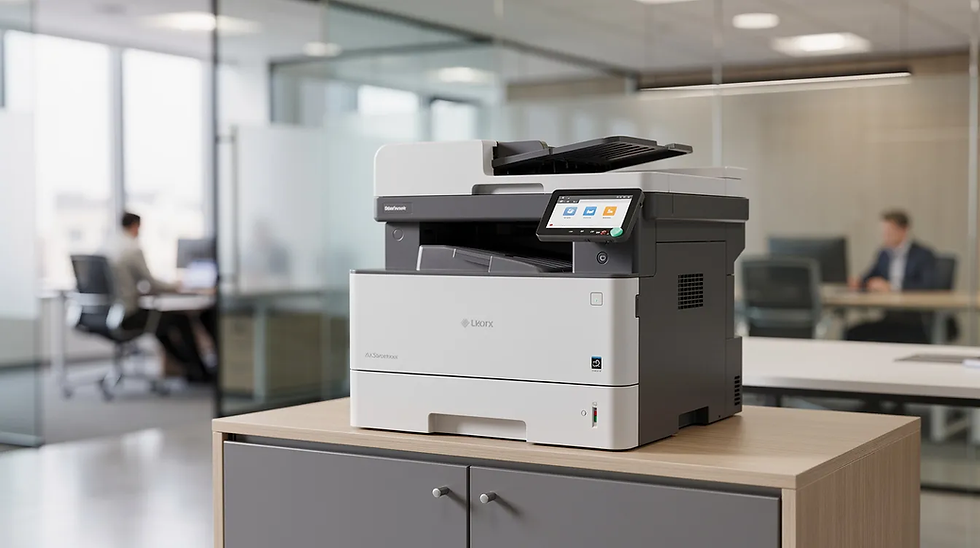
For IT managers, this approach delivers real operational benefits. Fewer unique spare parts to stock means simpler inventory management. Service interventions are faster because technicians work with straightforward assemblies. Maintenance schedules become predictable rather than reactive, supporting better budgeting and resource allocation across your supply chain.
Durability Meets Sustainability: Eco-Conscious Engineering
Kyocera links long component life with environmental responsibility, recognizing that durability and sustainability are two sides of the same coin. Devices that last longer consume fewer resources over their lifecycle—less manufacturing energy, less raw material, less shipping, less waste.
Lower fusing temperatures in newer ECOSYS and TASKalfa models can reduce energy consumption significantly compared with conventional systems. Specially formulated toner and efficient heaters enable this reduction without sacrificing print quality. For organizations tracking power consumption and environmental management metrics, these savings compound across fleets of devices operating for years.
Kyocera’s toner recycling initiatives extend the ecofriendly approach beyond the device itself. Used toner cartridges and waste toner bottles can be collected, separated, and granulated into recycle for new plastic products. This closed-loop thinking helps minimize waste and reduces demand for virgin materials.
Even packaging reflects this philosophy. Kyocera’s pulp molds and recycled corrugated board designs have won WORLDSTAR Global Packaging Awards in 2021, 2023, and 2024, plus Japan Packaging Design Awards. These recognitions confirm that durability thinking extends beyond components to encompass entire product lifecycles, reducing waste and energy consumption at every stage.
Advanced Security Features: Protecting Your Data and Devices
In today’s digital landscape, security is a top priority for any organization, and Kyocera printers are built with this in mind. Kyocera devices come equipped with advanced security features designed to safeguard your sensitive information and ensure reliable operation across your office equipment. From robust password protection and user authentication to comprehensive data encryption, Kyocera’s security protocols help prevent unauthorized access and data breaches.
Secure printing options allow users to release documents only when present at the device, reducing the risk of confidential information being left unattended. These features are seamlessly integrated into Kyocera printers and copiers, providing peace of mind without complicating daily workflows. By combining strong security with energy-efficient performance, Kyocera enables businesses to print confidently, knowing their data and devices are protected while consuming less energy. This commitment to security and reliability makes Kyocera a trusted choice for organizations that value both productivity and protection.
Energy-Efficient Design: Saving Power Without Sacrificing Performance
Kyocera’s approach to energy efficiency is a game changer for businesses seeking to reduce their environmental impact without compromising on print quality or performance. By leveraging fine ceramic components and advanced semiconductor packages, Kyocera printers are engineered to minimize waste and energy consumption at every stage of operation. These ceramic components not only enhance durability but also contribute to lower power requirements, ensuring that devices use less energy while delivering consistently high-quality printing.
Whether you’re running a single device or managing a fleet, Kyocera’s energy-efficient design means lower electricity bills and a smaller carbon footprint. The result is reliable operation and outstanding print quality, all while supporting your organization’s sustainability goals. With Kyocera, you can be confident that your office equipment is working efficiently, helping you achieve cost savings and a positive environmental impact with every page printed.
Comprehensive Range of Devices: A Solution for Every Office
Kyocera offers a comprehensive range of devices tailored to meet the diverse needs of modern workplaces. From compact printers ideal for small offices to robust multifunctional devices built for high volume printing environments, Kyocera’s lineup is designed for reliable operation and consistent print quality. Each device benefits from the company’s expertise in industrial equipment, incorporating fine ceramic components and advanced semiconductor packages to ensure long-lasting performance.
Whether your business requires high-speed printing, advanced finishing options, or seamless integration with document management solutions, Kyocera offers a solution that fits. The versatility of Kyocera printers and copiers means you can scale your print infrastructure as your needs evolve, all while enjoying better value, reduced waste, and increased productivity. With Kyocera’s commitment to quality and innovation, your office can work smarter and more efficiently, no matter the size or scope of your printing requirements.
Ease of Maintenance and Support: Keeping Your Workflow Smooth
Kyocera’s dedication to user-friendly design extends to every aspect of maintenance and support, ensuring your workflow remains uninterrupted. Thanks to long life components such as durable ceramic parts and high-capacity toner cartridges, Kyocera devices require fewer replacements, reducing both downtime and environmental impact. The intuitive interfaces and straightforward maintenance procedures make it easy for users to keep devices running at peak performance with minimal effort.
In addition to robust hardware, Kyocera backs its products with comprehensive support programs, including online resources, responsive phone assistance, and on-site service when needed. This commitment to customer care means you can rely on consistent print quality and reliable operation, allowing your team to focus on productivity rather than troubleshooting equipment. By choosing Kyocera, you’re investing in devices that are as easy to maintain as they are to use, supporting your business’s efficiency and sustainability goals.
Real-World Reliability: What Long-Life Components Mean in Daily Use
Consider the environments where printers face their toughest tests: educational institutions printing exams during finals week, law firms producing case files under deadline pressure, logistics hubs printing labels around the clock. These high volume scenarios demand reliable operation without compromise.
Picture a 50-user office running an ECOSYS device at 15,000–20,000 pages per month for 5 years. The drum stays within its rated life throughout. The machine requires only toner replacements and periodic preventative maintenance. Unplanned service visits remain minimal because components are engineered for this exact duty cycle.

The downstream benefits for organizations are clear. Fewer breakdowns mean fewer interruptions to productivity—staff stay focused on work rather than troubleshooting equipment. Maintenance windows are shorter and more predictable. Service contract escalation decreases because issues simply don’t arise as frequently. Independent evaluations have consistently rated Kyocera devices highly for reliability, particularly in high-volume long-term testing, earning high marks including the 2018 Keypoint Intelligence “Most Reliable Colour Copier MFP Brand” award.
For medical devices manufacturers, data centers, and other operations where equipment uptime directly affects business outcomes, this reliability translates to reduced risk and better value over the device lifecycle.
Choosing Kyocera for the Long Haul: What Buyers Should Look At
Buyers can deliberately select Kyocera models and configurations that maximize the benefit of long-life parts. The key is matching device capabilities to actual workload requirements.
Start with concrete evaluation criteria: monthly duty cycle versus rated drum life, real-world toner yields based on your typical coverage, environmental certifications like ENERGY STAR or Blue Angel where applicable, and availability of authorized local service. Kyocera offers document management solutions across various applications, so understanding your specific needs helps identify the right fit.
Match device families to workload. ECOSYS models suit small offices and mid-size environments with predictable volumes. TASKalfa MFPs serve departments and production-like environments needing scanning, finishing capabilities, and sustained high page counts.
Factor in total cost of ownership across 5+ years: acquisition price, toner and electricity costs, expected drum and fuser replacements, and the hidden costs of downtime. When you spread component costs over millions of pages, devices with long-life electronics and industrial components often deliver lower running costs than systems requiring frequent cartridge changes.
Kyocera’s component longevity represents a strategic business decision that helps your technology work smarter—not just a technical specification buried in a datasheet. The efficiency gains compound over years of operation, delivering cost efficiency that justifies careful evaluation during procurement.
Kyocera’s Future Plans: Innovation on the Horizon
Looking ahead, Kyocera continues to push the boundaries of what’s possible in printing and beyond. The company is investing heavily in research and development, with a focus on advanced materials like fine ceramics and next-generation semiconductor packages. These innovations are set to drive the creation of even more efficient, durable, and eco-friendly devices, further reducing waste and energy consumption across the product lifecycle.
Kyocera’s vision extends beyond traditional office equipment, with ongoing projects in autonomous driving, aerospace systems, and other cutting-edge fields. This forward-thinking approach ensures that Kyocera remains at the forefront of technology, delivering solutions that meet the evolving needs of businesses worldwide. With a steadfast commitment to environmental responsibility and sustainable practices, Kyocera’s future offerings will continue to minimize environmental impact while maximizing performance and reliability. Whether you need advanced printing solutions or are looking to embrace the next wave of innovation, Kyocera’s roadmap promises exciting developments for years to come.
FAQ
How long do Kyocera drums and core components actually last in practice?
Ratings vary by model, but many Kyocera amorphous silicon drums are specified for hundreds of thousands to several million A4 prints under standard office conditions. TASKalfa devices include drums capable of lasting beyond 600,000 pages, with some reaching specifications around 4.8 million impressions.
Real-world life depends on factors including media type, environmental conditions, and maintenance practices. However, typical customers often run devices for 5–7 years without needing a drum replacement. Fusers and transfer units are similarly rated for long intervals, usually aligned with major service milestones rather than annual swaps.
Are Kyocera’s long-life components more expensive to replace when they do wear out?
Unit prices for drums or fusers can be higher than low-end competitors, but replacements are needed far less frequently. The calculation that matters is cost-per-page and TCO over several years, not individual component price.
When you spread component cost over millions of pages, kyocera copiers become competitive or cheaper than systems requiring frequent cartridge changes. Discuss expected lifetime and service contract structures with your dealer to understand long-term savings specific to your volume.
Do long-life components affect print quality, especially for colour or graphics?
Kyocera designs its amorphous silicon drums and developer systems to maintain stable charge and toner transfer, preserving line sharpness and halftone smoothness across the drum’s lifespan. The technology actually supports consistent quality rather than compromising it.
Proper calibration, quality genuine toner, and firmware updates help keep colour and grayscale performance consistent over time. A longer lifespan doesn’t mean lower quality—it reduces the gradual degradation often seen with less robust consumable designs.
What maintenance is required to keep Kyocera components performing for years?
Basic user practices include using recommended paper types, following cleaning prompts when displayed, and avoiding forcing jam clearance that could damage internal surfaces. These simple habits support the durability built into the design.
Periodic preventative maintenance by an authorized technician—typically every 200,000–300,000 pages depending on model—keeps the engine clean, belts properly tensioned, and firmware current. Long-life parts are designed for infrequent handling, usually only during scheduled service windows.
Are long-life Kyocera components compatible with aftermarket or third-party toners?
Kyocera’s long-life drums and fusers are tuned to work with genuine Kyocera toner, including specific charge characteristics and fusing temperature profiles. This tuning is essential to achieving the promised component life.
Third-party toner can accelerate wear, cause image defects, and increase contamination buildup on drum and fuser surfaces. Using original consumables ensures you fully realize the promised service life and maintain any applicable warranties or service agreements covering your business printing infrastructure.


Comments